Although it is fun to look at works of literature as reflections of their time periods or to as supporters of a certain argument or moral stance, most of the time my attachment to a source is really based on that first scan, a gut feeling that the author and I have some kind of shared understanding. I picked the manuscript that my thesis was based on, after all, after reading just one of its miracles and recognizing feelings that were familiar to me: desperation, faith, hope. My thesis, however, focused on pilgrims’ spiritual lives, with the implication that the trajectory of a society can be summed up by the emotional highs and lows of individuals. This, I thought, was already a risky proposition, since surviving sources from the time focusing on emotion were already rare compared to two-dimensional hagiographies or documents glorifying war.
I realized through the pandemic, however, that even then I had not decentralized enough; I was simply focusing on the victories and defeats of the individual rather than of the kingdom as a whole. Because I do think of 2020 as The Year My University Renounced Vulnerable Students (a low) and The Year I Finished My Thesis (a high), but more than that it was The Year I Started Flossing Every Day and The Year I Made A Million Loaves of Sourdough. I’m thinking now that maybe the mundane is just as important, if not more important, than the big moments.
This week I just have a document that I looked at without any intent of analyzing it (nor ability to analyze it, if I’m being honest) and with no (direct, anyway) relation to any significant event, big or small. It is an herbal from the late 14th or early 15th century, with some text that I cannot read (one day I’ll learn paleography but that day is not today) and lots of very detailed and very lovely pictures. As the actual manuscript goes from beautiful and illuminated at the beginning to progressively more plain text, I’ve ordered these by the length of my descriptions:
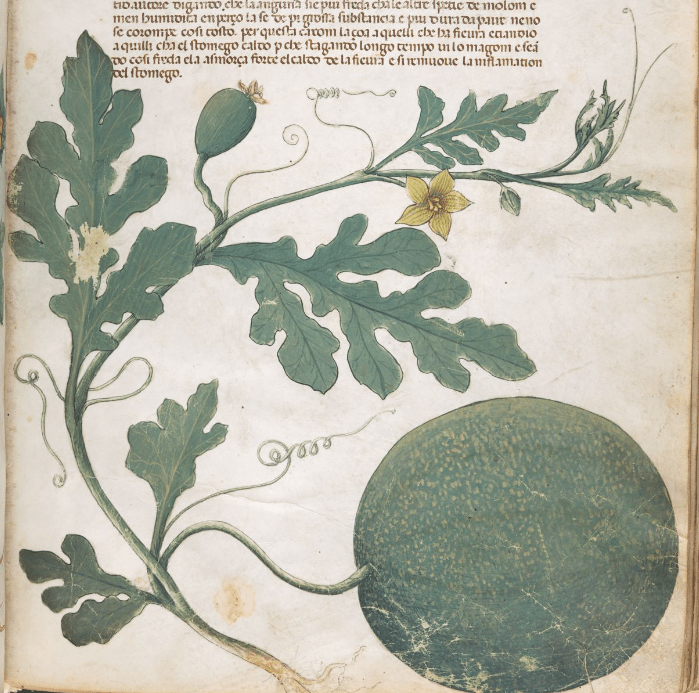
First, the best fruit of all time, the watermelon! The pretty splayed leaves, the tendrils, the bright yellow flowers, the beautiful dark green of the melon, are all pretty much the same as as watermelon plants today:
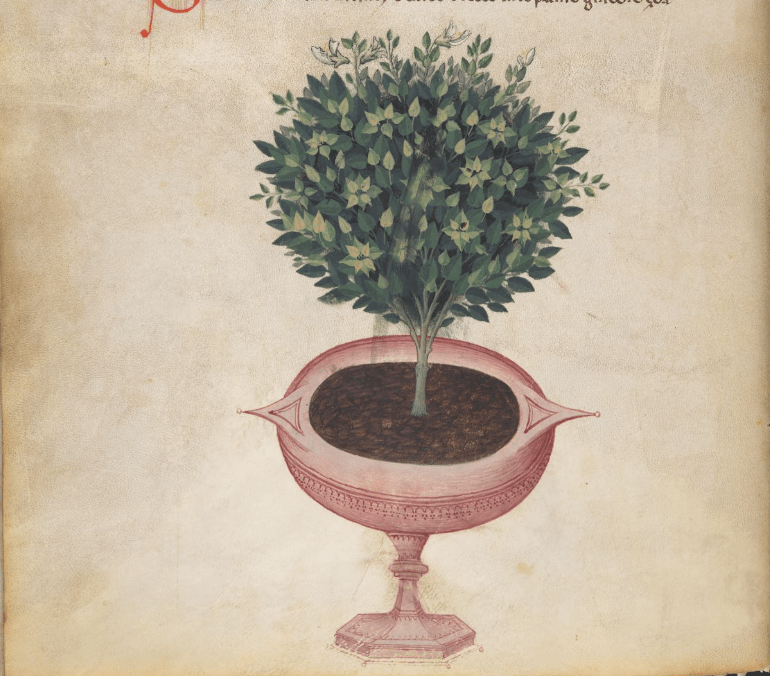
A basil plant that looks much like a decorative bush than any basil I’ve ever seen, with a pot whose angle pretty perfectly encapsulates the late-medieval urge to capture the 3D but refusing to use perspective:
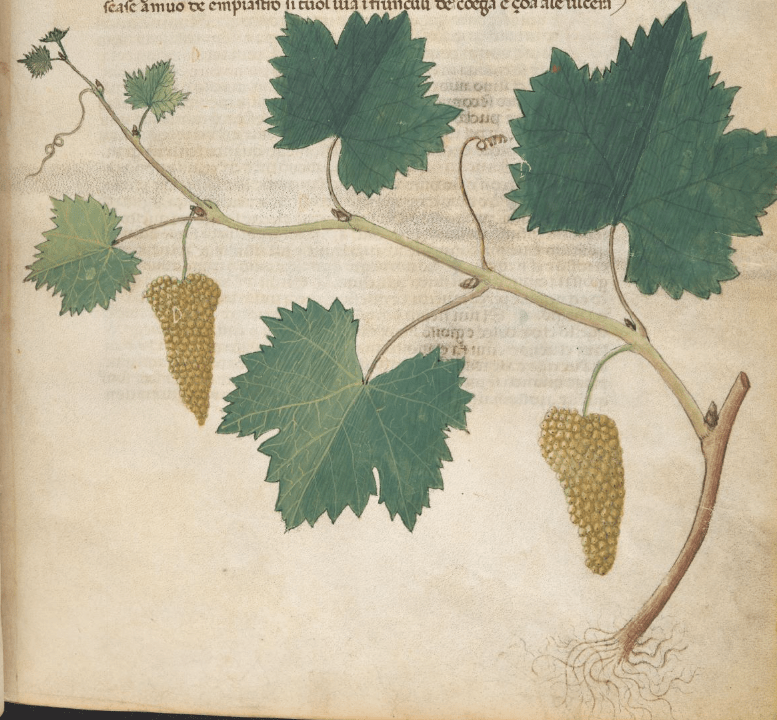
A grape plant that lacks any support and is magically standing on its own:
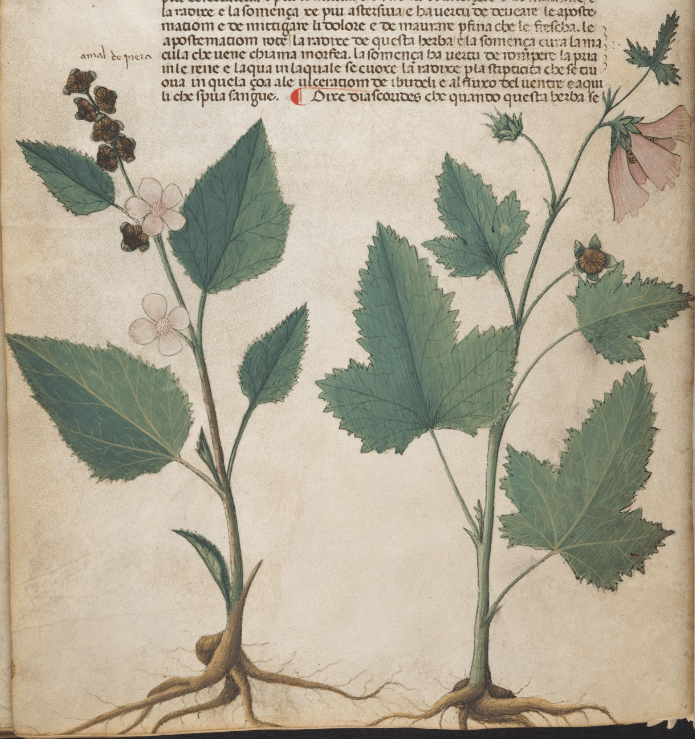
A marsh mallow plant, sans cute grass in order to show the edible roots:
A cilantro plant with the skinniest leaves I’ve ever seen:

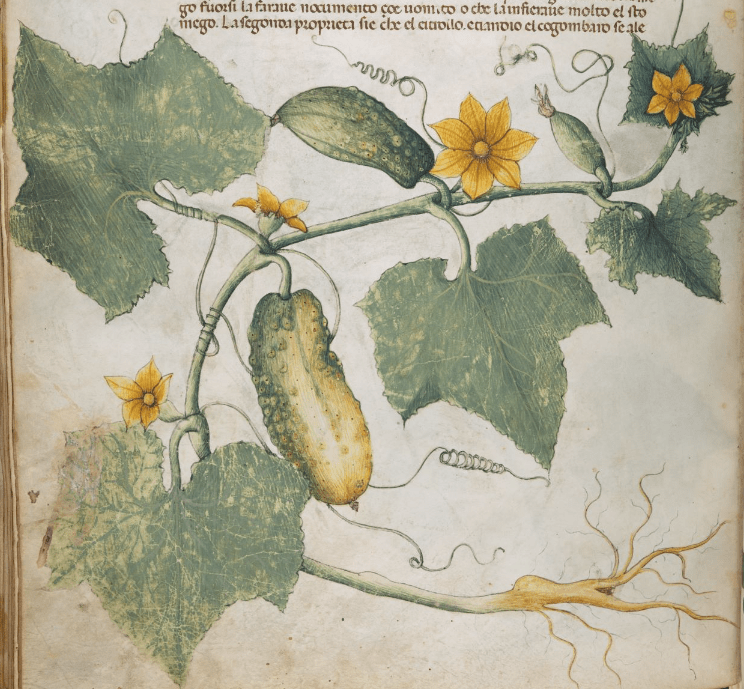
The watermelon of veggies, the cucumber:
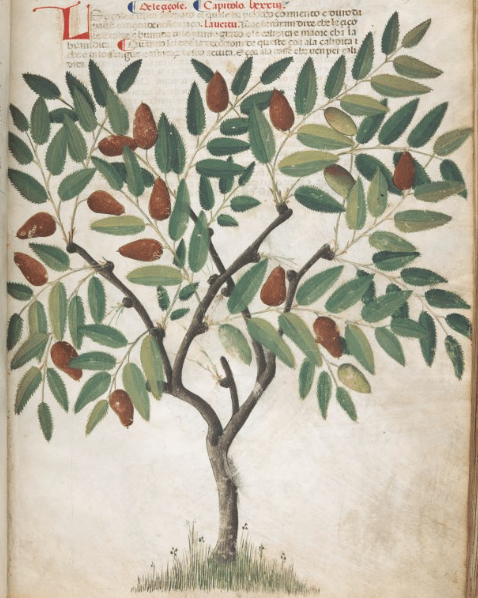
A date tree, on a cute patch of grass:
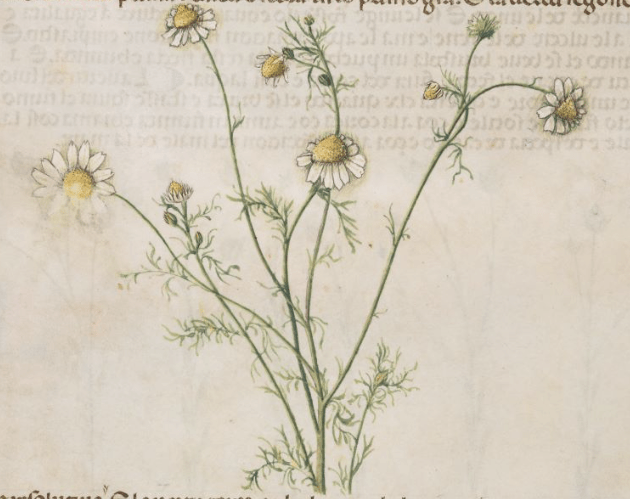
Chamomile, my favorite tea:
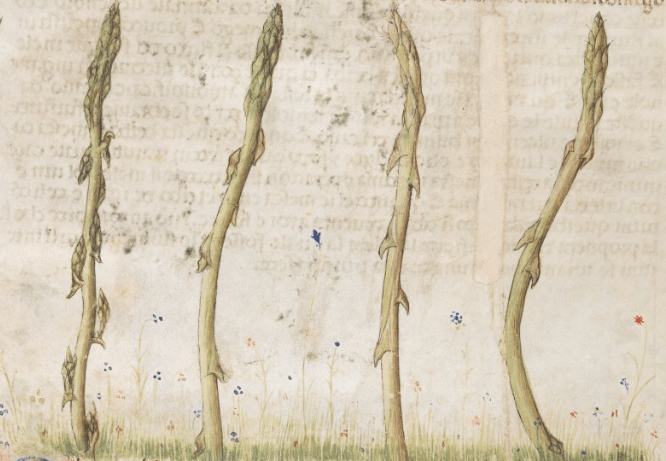
Some dancing asparagus:
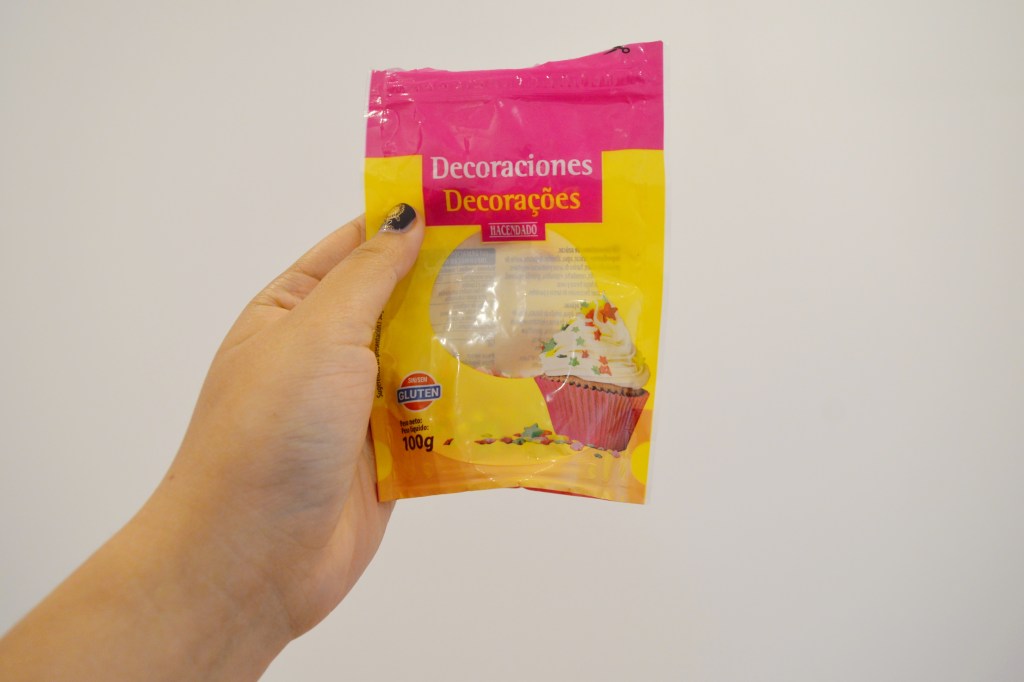
About a month ago it was the birthday of the one of the teachers at my school. I made her a naked cake, so I decided to use the scraps to make cake pops. Just like the miniatures of plants, these cake pops are a tiny reminder of the real thing. Since the frosting-to-cake ratio depends on the moisture of the cake, it’s impossible to write specific quantities. I had baked my cake to be especially sturdy, so it was a little dry already coming out of the oven, and I had let it sit out for a full day, so it was properly stale. The amount of scraps I ended up with was as if I had filled up two mugs with hot chocolate. And the amount of frosting I ended up using was as if I spooned a dollop of whipped cream on each. The cake recipe I used is the classic one from Minimalist Baker, and for the frosting I just quickly whipped together some vegan butter and powdered sugar. Any cake and frosting recipe would work, but I think the applesauce in this recipe particularly gave the cake a really even consistency. I’ve found that when using other binders, like seed eggs or aquafaba, that the crumbs tend to be larger and more uneven.
Miniatures Cake Pops
Ingredients
- cake (preferably dry and stale)
- frosting
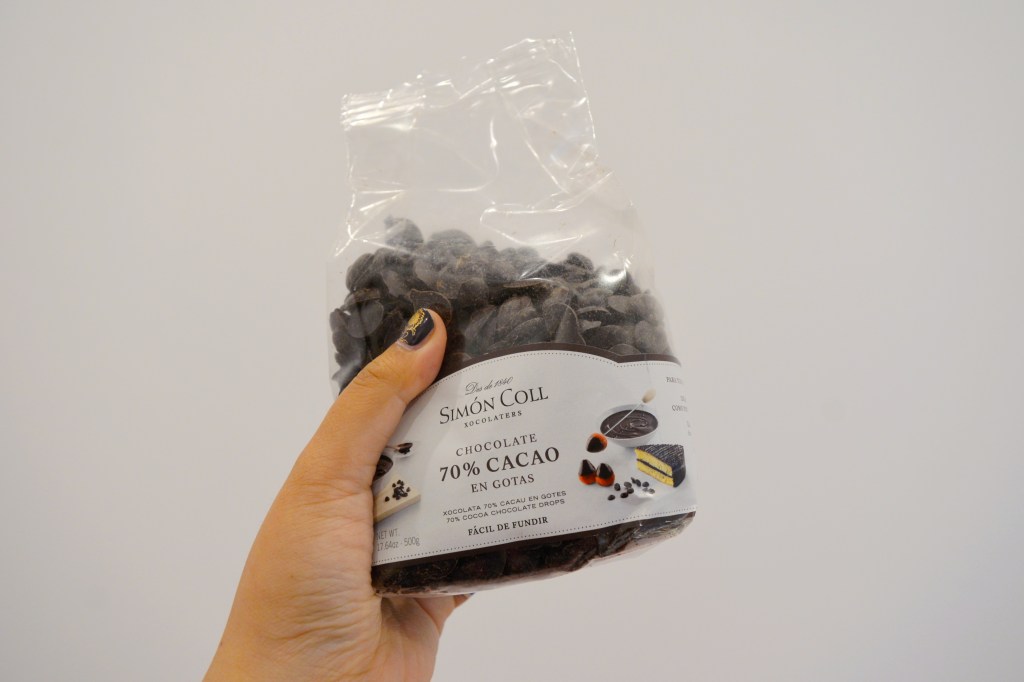
- chocolate chips
- sprinkles
Directions
- Prepare squares of parchment paper that you can slide into your freezer.
- In a mixing bowl, crush the cake with your hands until it’s like wet sand.
- Add and mix in frosting. If unsure of amount of add, add a little a time.
- Form into balls and place on parchment paper. Freeze for at least 1 hour.
- Melt chocolate chips (I did 20 second increments in the microwave).
- Pour sprinkles into a plate or flat bowl.
- Remove cake balls from the freezer, and work quickly, coating each with chocolate and tapping each into the pile of sprinkles before re-placing it on the parchment paper.
- Freeze for 2 minutes, and enjoy! Keeps in the freezer or refrigerator.
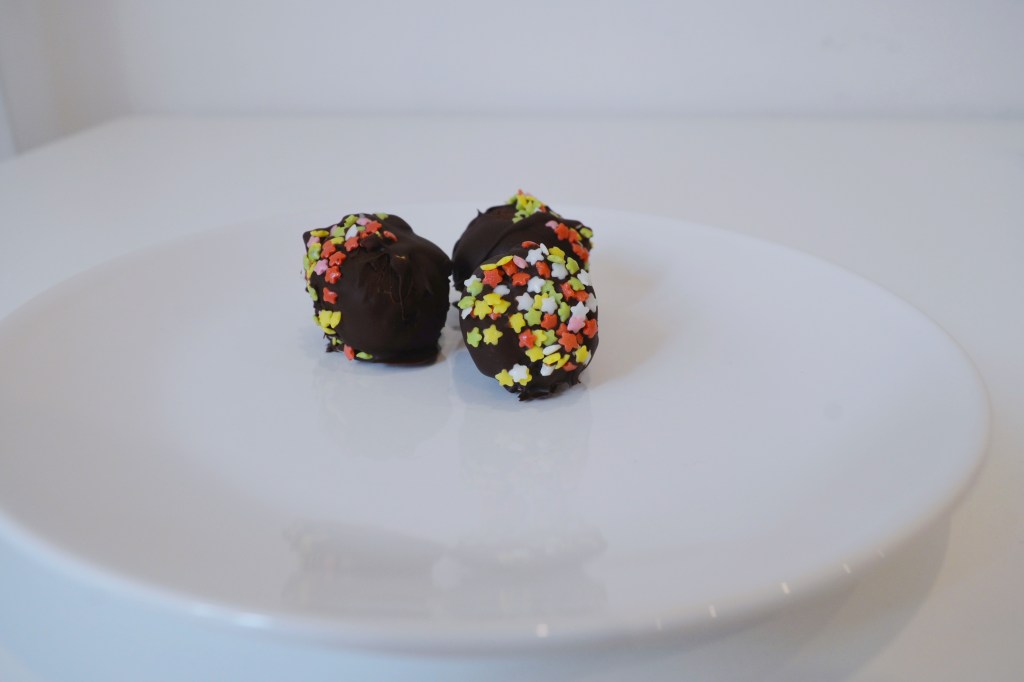
Using the entire Minimalist Baker recipe will yield about 100 pops. I only made half the recipe and only used scraps, so I ended up with about 12.
 Racións
You must be logged in to post a comment.