The word “feminism” is used more loudly here than in the U.S.. You can see little purple stop signs that say “Stop Violencia de Género” everywhere. In my school’s library there is a black sign saying “Non son o teu dono” (I’m not quite sure what this means, is it saying the very bare-minimum message of, I don’t own you and can’t dictate your life? or is it about women’s unpaid labor, as in I’m not your keeper and I shouldn’t be doing housework for you? A quick google search has turned up nothing, but either way it has to do with protesting gender inequality.). And for my last few weeks of school I even had to do some feminism-related trivia with my classes. As there is little to no discussion of race or intersectionality, however, the efforts feel rather redundant (is anyone going to disagree that sexism is wrong?), and everyone is left with the feeling that if they don’t actively judge women for being women then that’s enough.
If the intersections of race, colonialism, and gender were more talked about, it might have been possible to bring up something like Esperança Garcia’s 1770 letter, especially in the context of my FOL (Formación y Orientación Laboral) classes, which explore regulations surrounding labor and employment. (To be clear, I’m not saying that slavery is a legitimate form of labor. But, in a milder sense, neither is full-time, badly paid work under capitalism, and the students at my school are learning that employers and employees are on an equal playing field in terms of rights and responsibilities, as well as the idea that rotating strikes and work-to-rule are abusive to the employer.)
Garcia’s letter is quite refreshing because it dispels the myth of modern progress that back in the day people in lower economic classes lacked agency, as if having the one-in-a-million potential to get something like the American Dream today puts us in a better position than having the one-in-a-million chance to earn the favor of one’s lord or master. At my monastery in the fifteenth century there was what we could consider a riot/strike as the townspeople protested the new policies of the monks that ruled over them; I’m sure ill-treated laborers from time immemorial have been doing the same.
As it was mostly Europe-idolizing white men who controlled the Brazilian narrative for a long time, it is incredible that her letter survives. Her letter, transcribed and clarified, goes like this:
Eu sou uma escrava de Vossa Senhoria da administração do Capitão Antônio Vieira do Couto, casada. Desde que o capitão lá foi administrar que me tirou da fazenda algodões, onde vivia com o meu marido, para ser cozinheira da sua casa, ainda nela passo muito mal.
A primeira é que há grandes trovoadas de pancadas em um filho meu sendo uma criança que lhe fez extrair sangue pela boca, em mim não posso explicar que sou um colchão de pancadas, tanto que caí uma vez do sobrado abaixo pelada; por misericórdia de Deus escapei. A segunda estou eu e mais minhas parceiras por confessar há três anos. E uma criança minha e duas mais por batizar. Peço a Vossa Senhoria pelo amor de Deus ponha aos olhos em mim ordenando digo mandar ao procurador que mande para a fazenda de onde me tirou para eu viver com meu marido e batizar minha filha.
De Vossa Senhoria sua escrava
Esperança Garcia
This could be thought of as a workplace dispute. Whoever she is calling “Vossa Senhoria” is the master, the big boss, the owner of multiple plantations. This Antônio Vieira do Couto guy is her overseer or manager or direct supervisor. Do Couto wanted Garcia to be his personal cook, so he moved her from her home on the Algodões plantation, where her husband is, into his own house. He used her literally as a punching bag and beat her son so badly that he was spitting out blood. In addition, she and the other enslaved women had not been able to go to Confession in three years, and her daughter along with two other children hadn’t yet been baptized. She is asking the master to send her back to Algodões to be with her husband and baptize her daughter.
This request reveals that there was not a direct power hierarchy. If there were, Garcia would not have dared written to the master after she ran away from do Couto. Instead, although do Couto is probably a free man and Garcia is not, to the master they are merely different cogs in the functioning of the plantation, so Garcia is not afraid to condemn do Couto as cruel and violent. Ironically this also means that in terms of economic class do Couto, probably a wage worker, was probably closer to Garcia than to the master, and in a world in which he was less racist and less into power trips they could have protested the master’s hoarding of wealth together in economic solidarity.
Her reasoning also reveals the power in a woman’s devotion. Nowadays after unfair treatment by a company, one starts an arbitration process and then goes to court, where one must construct a case based on laws and contracts and workplace norms. But Garcia relies on her piety, her desire to participate in all the proper Catholic rituals, and her very gender-role-appropriate undying mother’s love to mark herself as morally sound. And by making her wish for her daughter’s baptism the main reason for wanting to return to her old position, it is in turn a challenge to the master’s own religious devotion. If he denies her request, he implies that he cares neither about the Church nor about uniting families and thus loses some of his own moral high ground. Her name, Esperança (Hope), is fitting because she got what she asked for, to return to her previous position and get away from do Couto.
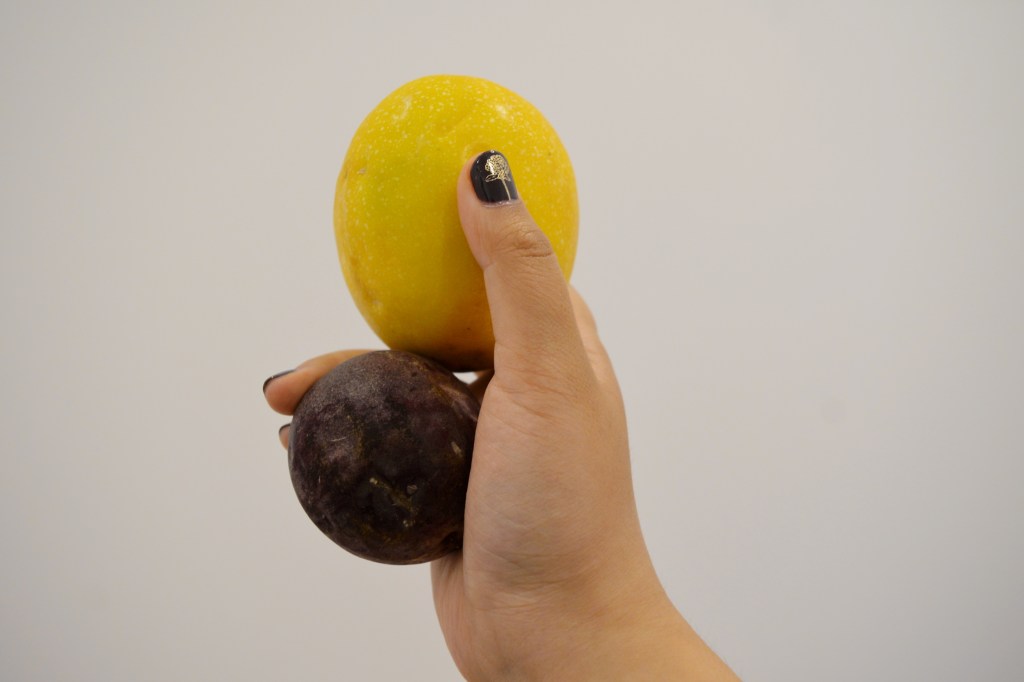
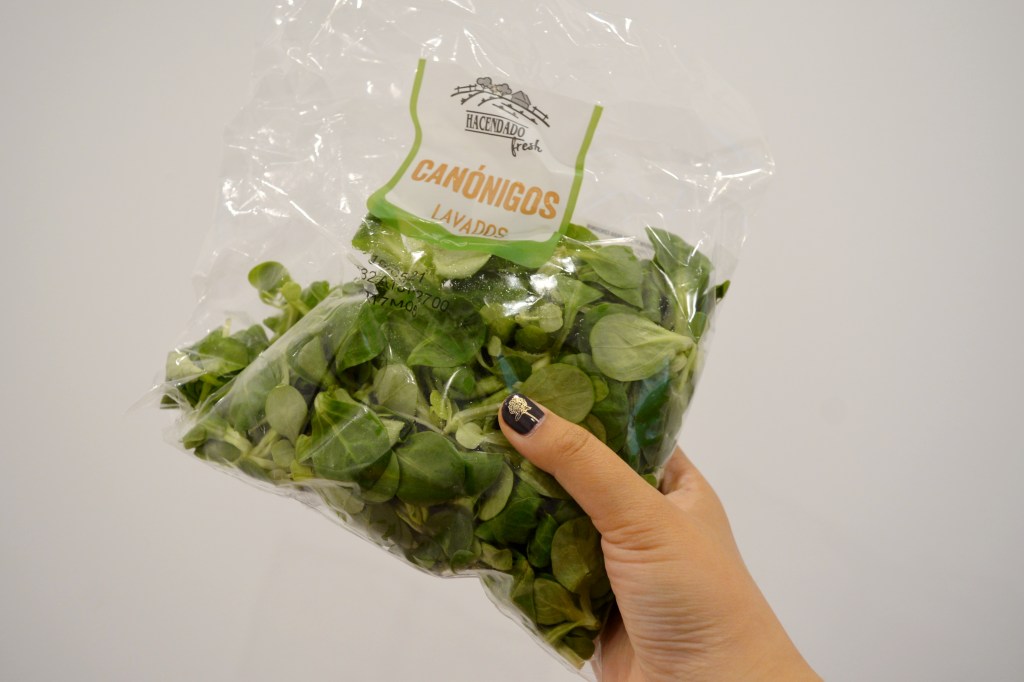
I made this warm salad a while back, and I put salt but not sugar in it so I’m classifying it as savory. If you don’t have passionfruit you could always use a tiny bit of citrus juice, but then you wouldn’t get the crunch of the seeds and it wouldn’t be quite as exciting.
Hopeful Warm Salad
Ingredients
- half bag canónigos
- half passionfruit
- handful strawberries
- pumpkin seeds
- oil
- salt
Directions
- Heat up a tiny bit of oil in a frying pan on the highest heat. Drop in canónigos (like spinach, it shrinks), and toss for a couple minutes or until just wilted.
- Mix in pinch of salt, and plate.
- Spoon passionfruit seeds until they completely cover the canónigos.
- Add sliced strawberries and pumpkin seeds as garnish.

Makes 1 portion.
 Racións
You must be logged in to post a comment.