This week was the first that I’d heard of the undeserved death of a lecturer at my university that happened over ten years ago now. The reporting on it was extensive, but as all these articles were so focused on the spectacle of his death and the university’s response, I could not actually find anything about what this lecturer accomplished or researched. And it was incredibly disappointing to think about how toxic my university’s administration was and continues to be, as well as how unforgiving the academic world is until one achieves the mystical status of tenure. Instead I focused on the fact that students at the time had christened him St. Antonio, so I decided to look at the sermons of the original St. António of Lisbon himself. Since these are each assigned to a particular week, I found the one that would be used the day after tomorrow, on the third Sunday after Easter. I’m using the version found in the 1998 publication Santo António de Lisboa: biografias-sermões, from Editorial Franciscana.
Fittingly, the sermon is about how false and contradictory the material world can be, and how those who suffer in life may have the best shot at peace in heaven. The first section is titled “A pequenez da nossa vida” (the triviality of our lives). He centers upon the quote “Um pouco e já me não vereis” (NIV John 16:16: In a little while you will see me no more), referring to Jesus’s death and resurrection but also to the ephemerality and ultimate insignificance of life on earth. Unlike Clare from last week, Anthony emphasizes not the glorious reward of piety but the dangers of living without it: “O fumo dissolve-se em ténues auras. Também ao chegar o ardor da morte, a abundância dos bens temporais fugirá e faltará, e a concupiscência carnal e toda a vanglória descanecer-se-ão. Ai, portanto, daqueles que perderam a eternidade da vida por uma pequena abundância e momentâneo deleitezinho da vida presente” (302). These momentary pleasures are the seven deadly sins, explained through the seven angels of the apocalypse: “A terra designa os avarentos e os usurários; o mar, os soberbos e os infatuados; os rios e fontes das águas, os luxuriosos; o sol, os vaidosos; o trono da besta, os invejosos e os tristes; o rio Eufrates, que se interpreta abundância, os ébrios e os gulosos; o ar, os falsos religiosos” (303).
He brings us back from the alarming tone of an apocalypse to the idea of an eternal reward (after the requisite suffering). He first presents the figure of a “prostitute” from Revelation 17 as a model of sin, and throughout the rest of the sermon he refers repeatedly to the pain of a person in labor giving way to the joy of seeing the newborn child. Even in these woman-centric topics, he is not overly disparaging to women. The prostitute, for example, is purely a metaphor, and just as with the dramatic events of the biblical apocalypse he clearly does not endorse any type of literal interpretation. It is the extravagance of her dress and the mystical beast on which she sits that condemns her just as much as her profession (and he cannot avoid naming her profession because it is thus listed in the bible). However, the prostitute is not an outside force we can distance ourselves; she is a representation of humanity itself: “A mulher prostituta são todos os mundanos, conculcados pelos demónios, como é o esterco pelos transeuntes” (306).
He does slip into some blatant sexism in his questionably accurate description of childbirth and attempt to turn that into a metaphor too. For example, he revisits the idea of men as “virtuosa” and women as “efeminada.” When a girl is conceived, “a alma […] enche-se-lhe o rosto de palidez, isto é, mancha-se com o amor terreno; e caminha com dificuldade e languidez, porque, negligente e tíbia, destituída de forças, coíbe-se de praticar boas obras” (322). But he does not take labor pains for granted. In fact, the pain is enough to elevate them to the status of ascetic saints: “A mulher quando dá à luz tem tristeza. A palavra triste parece-se com tritus, de tero, teris, esmagar. Os santos, na peregrinação deste exílio, são esmagados, aflitos, angustiados. O mundo não é digno deles” (311, italics original). If anything, he is implying that women in labor are under-appreciated, and by extension, anyone who leads a life of suffering is as well. He ends with a comparison of the laboring woman to the sinner in confession, a reminder that things will easily get better: “A mulher, quando está para dar a luz, está em tristeza; porém, depois de ter dado à luz, já não se lembra da aflição, por causa do gozo, do gozo da glória eterna” (327). (NIV John 16:21: A woman giving birth to a child has pain because her time has come; but when her baby is born she forgets the anguish because of her joy that a child is born into the world.)
For anyone who has been unjustly crushed by the pride and envy inherent in academia’s exclusivity culture, Anthony scrolls up one verse in John 16 to remind us that “O mundo alegrar-se-á, mas vós estareis tristes, mas a vossa tristeza se converterá em gozo, e o gozo daquele se converterá em trizteza” (310, italics original). (NIV John 16:20: you will weep and mourn while the world rejoices. You will grieve, but your grief will turn to joy) And for anyone who is complicit, redemption is not so difficult either: “na alma do verdadeiro penitente há dor e trabalho, e por isso o parto da confissão é leve e fácil; pois o trabalho consome as superfluidades. E os trabalho é das coisas que fazem suar muito” (326).
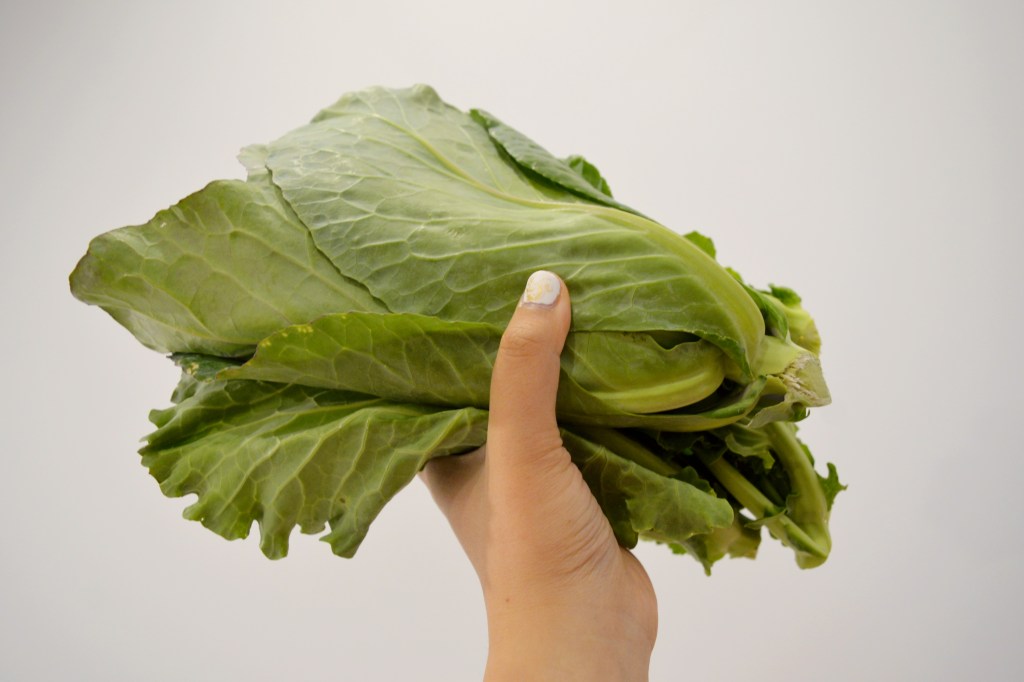
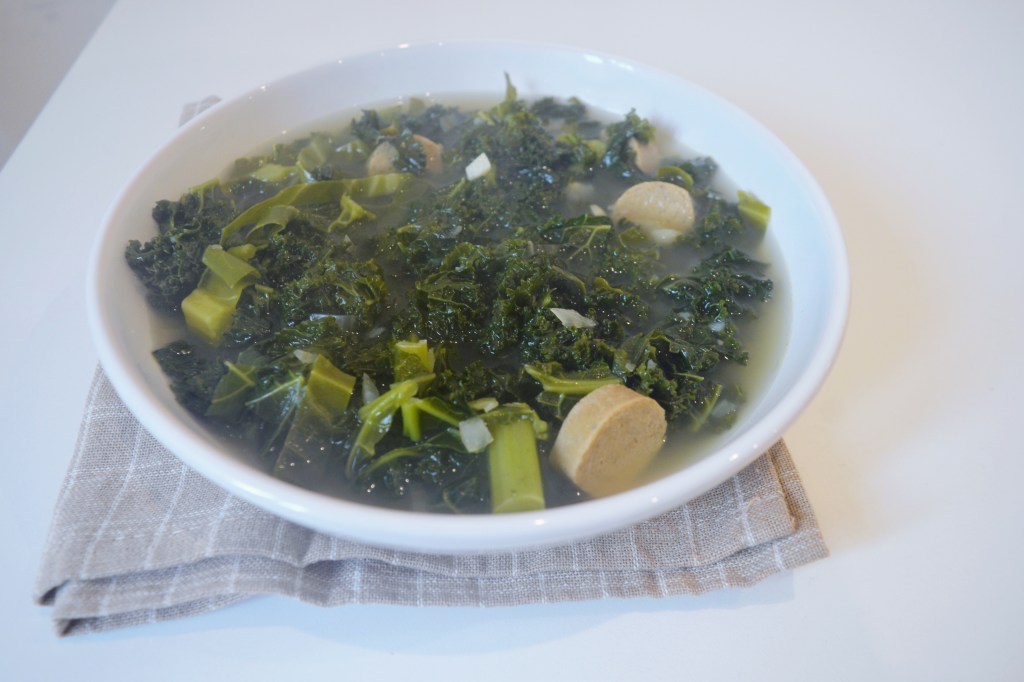
The soup that I made this week nicely matches the kind of existence Anthony encourages, one of simplicity and honesty, one that is truly “leve e fácil.” (And to be completely honest, I am not even really sure how to translate one of the veggies that I put in, so I am just writing the name that I found on the grocery label.) It has few ingredients that don’t require any complex prep and is basically just a watery mix of leaves and potatoes. And this’ll be one of many recipes, I hope, to come from the inspiration of Gabriela Oliveira’s book Cozinha Vegetariana à Portuguesa.

Light-and-Easy Caldo Verde
Ingredients
- 3 large potatoes
- 1 bunch kale
- 1/2 bunch xenos de repollo
- 1 onion
- 6 cloves garlic
- enough bouillon cubes for 4 cups stock
- 8 cups water
- vegan sausage
- olive oil
- salt to taste
Directions
- Dice potatoes and boil until cooked through, about 10 minutes.
- Slice kale and other veggie (use what you can find, but it should be chard-like) as thin as you have the patience for.
- Dice onion, mince garlic. Slice up vegan sausage (gluten-based would work best here, because they hold together in water, whereas pea protein would just disintegrate or lose all its flavor).
- Drain and mash potatoes.
- Cook onion and garlic with a dash of olive oil until onion is translucent.
- Add mashed potatoes and 8 cups water, along with bouillon cubes.
- Once boiling, add the greens and sausage. Cook for another 10 minutes on medium.
- Salt to taste!
Makes 6 meals when paired with bread.
 Racións
You must be logged in to post a comment.