This week I watched the one-man show Traga-me A Cabeça de Lima Barreto, as it was performed by Hilton Cobra in 2018. Like O Avesso da Pele, it has to do with perspective after death, but rather than a son reflecting on his father, it involves a soul reflecting on its own lived experiences. More specifically, in accordance with the views of early-twentieth-century eugenicists, a booming voice coming out from speakers wonders how it was possible that, given the superiority of white genes, Lima Barreto was able to produce such brilliant literary work? The rest of the show is a trial, of sorts, of Lima Barreto’s brain, unearthed specifically for this “scientific” racial study. Of course, even as Hilton Cobra speaks and acts and animates the stage, the anonymous prosecutor hears nothing, and it becomes evident that we, the audience, are the intended jury for this trial newly amended with Hilton’s protestations and powerful rhetoric, as readers today will define Lima Barreto’s legacy going forward.
Lima Barreto (born 1881, died 1922) published many novels in the first two decades of the twentieth century and just as many works posthumously throughout the next fifty years (see biographical entry in Brazilian Writers by Gale). His father was an immigrant from Portugal and his mother had once been enslaved, so he was considered mixed race (mulatto). In his writings he commonly criticizes Brazilian nationalism and additionally uses humor to expose racial and gender inequalities, among others. Triste fim de Policarpo Quaresma, published in 1915 and translated into English as The Patriot in 1978, is about a man named Policarpo Quaresma who unsuccessfully attempts to influence federal politics for the purpose of advancing and shaping Brazilian nationalism. It is fitting that Cobra should choose to represent someone so outspoken against educational and governmental institutions, as in this show it is precisely the educational establishment, which at the time supported the reasoning of scientific racism behind eugenics, that is metaphorically and literally picking apart his brain.
The show’s prosecutor highlights Barreto’s greatest achievement as Triste fim de Policarpo Quaresma, whose genius he attributes to his father’s white bloodline: “O cérebro do dito escritor tornou-se incrivelmente capaz de produzir obras rasuráveis como o Triste Fim de Policarpo Quaresma. A que se deve esse fenómeno? Agora, pela conjunção das sete teses fundamentais isso é claramente atribuído ao percentual de sangue branco de seus avós portugueses, os Enriques Lima, nascidos de Camões e Padre Vieira. Ja o restante, quase toda sua escrita inaproveitável, deriva claramente do sangue dos seus ascendentes africanos, nunca dados a pensar nem a produzir obras escritas para um legado da humanidade. Agrava esse quadro a presença de traços mestizos da mãe e do pai, que contaminam qualquer possibilidade de [crescimento?], purificação, e salvação” (43:55). So, without ever examining Barreto as a complex individual, nor the environment in which he grew up, the prosecutor separates his life’s events into a binary of accomplishments (such as literary talent) and faults (such as his alcoholism), which could then be attributed to the supposedly superior or inferior parts of his genetics.
Cobra’s performance is captivating and draws us into the contradictory expectations facing Barreto. At the start, Cobra is dressed smartly and respectably by Western standards, with a stuffy buttoned white shirt, vest, and suspenders. As the show goes on, he questions more and more his relationship to the Eurocentric standards of the academic world he participated in, and he slowly sheds this costume and dons a much more organic-looking necklace and loose patterned red tunic. The stage, too, transforms into something more chaotic and colorful. At 21:22, he begins throwing papers (perhaps representing his own misunderstood manuscripts?) haphazardly around the stage, shouting, “Os brancos não me reconhecem a superioridade intelectual. Os negros também não.” A simple chair frame is flipped into a myriad of positions. And most importantly, near the end, Cobra lifts up Barreto’s “brain” to reveal its alternative structure as a web of shells and drapes it over the bottom of his “face,” thus inverting the inner and the outer, expressing the frustration that judgers of his writing and person could be so reductive as to only see his race.
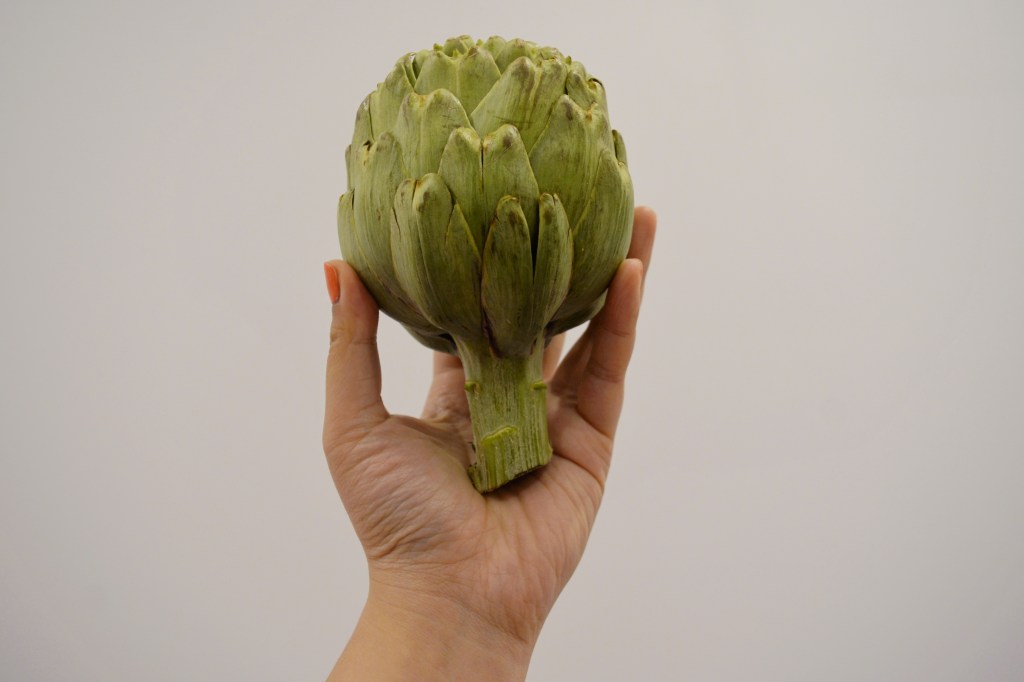
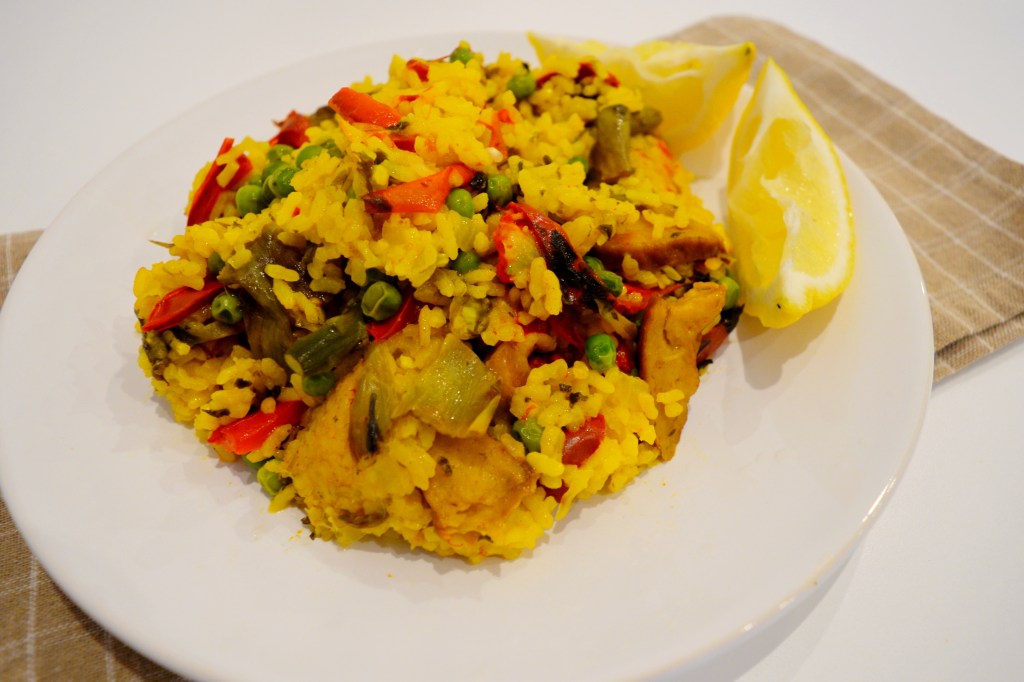
Artichokes are another entity whose insides are arguably more pertinent to their character than their outsides, and I opened fresh ones for the first time this week. I’ve been meaning to try making a paella for a while now, and I added seitan (which most accurately represents the texture of red meat over others), because my students told me that paella in this region commonly has chicken and meat added in addition to seafood; if I were trying to replicate seafood I might have leaned more heavily on the seaweed and made something like this. I did make this in a stock pot, as our apartment expectedly has no paella pan, but some socarrat formed nevertheless, so it’s possible no matter what tools you lack.
I also wanted to mention my favorite line from the show, in reference to his alcoholism: “Se tivesse eu me habituada tomar chá de camomila às cinco horas da tarde na Academia Brasileira de Letras provavelmente eu teria sobrevivido” (27:11). Obviously, after a long continuous monologue about the sadness and absurdity of the world, this is sarcastically reductive, but I do love the idea of chamomile tea as a source of comfort and healing! It’s certainly the way I take it a lot of the time.
Emotional-Bandage Paella
Ingredients
- enough bouillon cubes for 6 cups water
- .375 grams saffron threads
- 1 packet (3 grams) paella seasoning (turmeric, paprika, garlic, bay leaf, allspice, cilantro, saffron, clove, white pepper)
- seaweed flakes
- 1 onion
- 1 bell pepper
- 1 tomato
- 2 cloves garlic
- 2 heads artichoke
- 1 bunch asparagus
- 1 package seitan
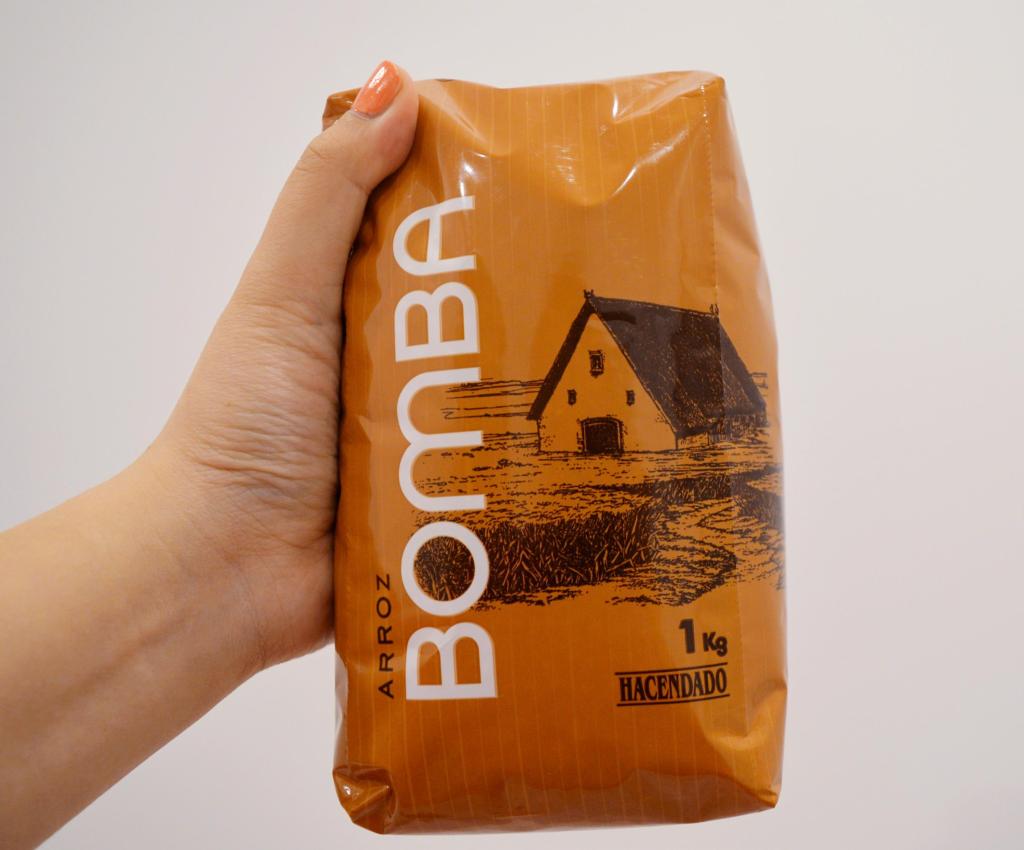
- 750 grams bomba rice
- 1 cup frozen peas
- 1 lemon
- olive oil
Directions
- In a small saucepan, combine bouillon cubes, 6 cups water, saffron threads, paella seasoning, and seaweed flakes. Heat until everything is dissolved.
- Dice onion and tomato, cut bell pepper into strips, mince garlic. Put in large stockpot with some oil and turn to low.
- In the meantime, chop asparagus into sections. Slice seitan thinly.
- Pull apart artichoke leaves and cut off any hard green sections until all you have left are the soft yellow insides.
- Add asparagus, seitan, and artichoke into the stockpot. Turn heat to high and sauté for a few minutes.
- Stir in rice and toast on high until slightly browned.
- Pour in stock and add in frozen peas on top. Cover pot and turn heat to low. Cook around 15 minutes or until the bottom of the rice starts to form a crust and all liquid is absorbed.
- Squeeze on lemon juice before serving!
Makes 5 meals.
 Racións
You must be logged in to post a comment.